On June 19, 2025, Rwandan opposition figure Ingabire Victoire was arrested on allegations of forming a criminal association and planning acts aimed to cause public unrest. The arrest comes just days before a U.S.-brokered peace agreement between Rwanda and the Democratic Republic of Congo (DRC), set to be signed on June 27 in Washington, D.C. Simultaneously, President Paul Kagame has notably withdrawn from the public eye, fueling speculation about his health and the political future of Rwanda. These seemingly disparate developments converge to highlight a deeper pattern within Rwanda’s political apparatus: a regime attempting to solidify its control at home while polishing its image abroad.
This opinion aims to examine the interlinkages between Ingabire Victoire’s arrest, Kagame’s disappearance from public view, and the regime’s succession concerns, particularly within the context of the ongoing diplomatic peace initiative. It does not speculate on the veracity of Kagame’s health rumors but rather focuses on the political implications of his absence and the synchronized timing of domestic crackdowns with international diplomacy.
Ingabire Victoire has long been a prominent critic of Kagame’s administration and a symbol of political opposition in Rwanda. She returned from exile in January 2010 to challenge the incumbent President Paul Kagame in presidential elections scheduled for August in the same year. She was not able to stand because she failed to get her party registered. She was arrested on October 14, 2010, and sentenced to 15-year jail in a trial which was widely criticized by human rights organizations and EU Parliament as politically motivated. Her re-arrest in 2025, especially under serious accusations involving state security, indicates a resurgence of state-led suppression.
The timing of this move is significant. With the world’s attention shifting to Rwanda’s role in the process of resolving the M23 conflict in eastern Congo, the arrest ensures that dissenting voices are muted ahead of potential media scrutiny. It sends a clear message domestically: the government will not tolerate alternative narratives, particularly during periods of heightened international visibility.
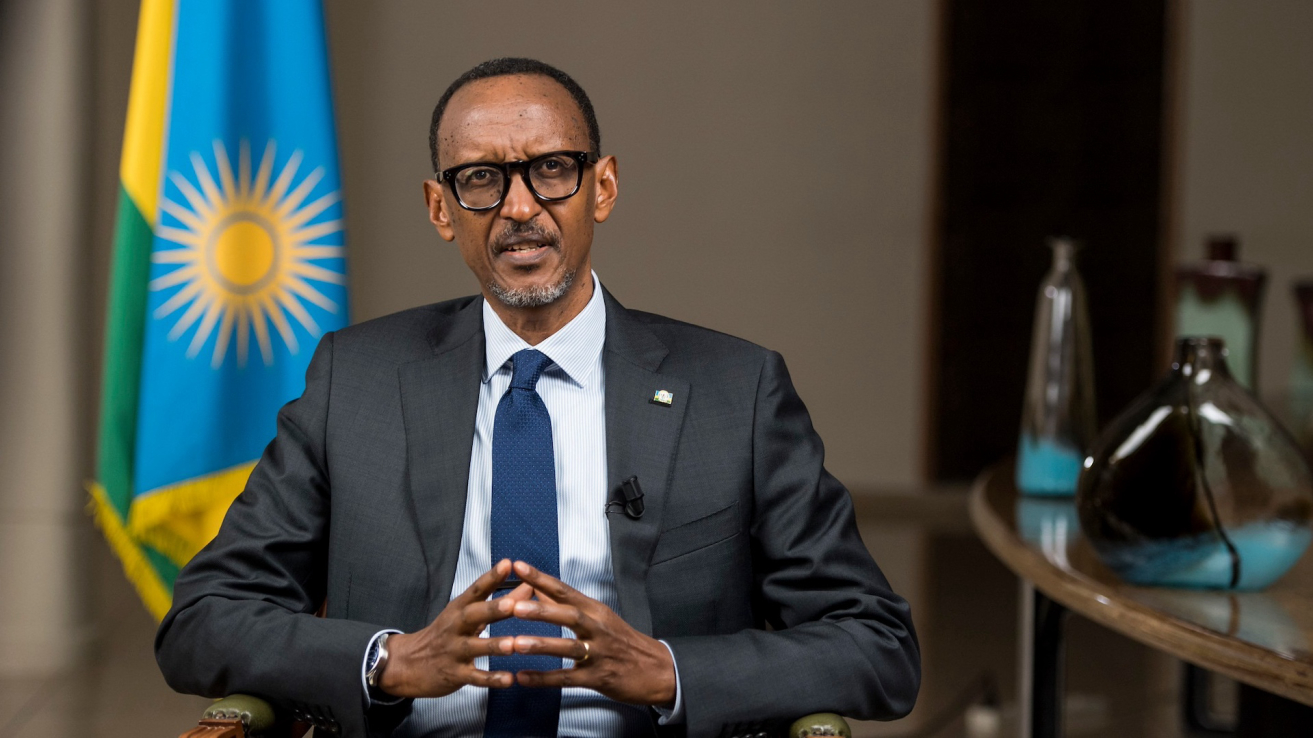
President Kagame’s near-total absence from public appearances in recent months has led to widespread speculation. Rumors about his ill health, while unconfirmed, have created a vacuum in national leadership. In authoritarian regimes, such absences often serve tactical purposes. A calculated retreat from the spotlight can prevent destabilizing speculation within ruling party ranks while shielding the leader from potential backlash associated with contentious policies or transitions.
The peace deal with the DRC, facilitated by the United States and Qatar, presents a major diplomatic opportunity for Rwanda by presenting herself as a force for good. On the other hand, Kagame’s strategic silence could possibly be designed to let Rwanda’s international proxies negotiate a deal that grants the regime legitimacy and relief from external pressures, particularly sanctions or aid conditionalities. His absence from the public eye could therefore be both a political shield and a method to test internal succession dynamics without explicitly endorsing any successor.
Rwanda’s political system has for decades been tightly centralized under Kagame’s leadership. Any hint of transition - voluntary or forced - invites significant risks to regime stability. The uncertainty surrounding Kagame’s health amplifies anxieties within the Rwandan Patriotic Front (RPF), the ruling party, and raises concerns about post-Kagame political continuity.
In this context, the arrest of opposition figures such as Ingabire serves not only to eliminate external threats to RPF monopoly of power but also to consolidate internal discipline. It sends a signal to potential challengers within the RPF and to the broader public that the regime remains firmly in control. It is a classic preemptive tactic often observed in regimes experiencing succession tensions: reinforce the external facade of stability by suppressing any indicators of dissent.
The Washington peace deal represents an opportunity for Rwanda to reposition itself on the global stage. Internationally, the country has faced increasing criticism for its alleged support of the M23 rebel group and its broader military involvement in eastern DRC. A successful peace agreement could relieve diplomatic pressure and help Rwanda restore its image as a stable and cooperative regional actor.
By sidelining controversial domestic actors like Ingabire and avoiding direct presidential involvement in the negotiations, Rwanda minimizes the risk of conflating its domestic political issues with its international ambitions. This separation allows Rwanda to present itself as a state capable of regional leadership and constructive diplomacy, even while suppressing dissent at home.
One could argue that Ingabire’s arrest is simply a matter of law enforcement, unrelated to Kagame’s health or the peace process. However, the pattern of timing, the lack of transparency, and Rwanda’s track record of political suppression make such a view difficult to sustain without deeper scrutiny.
Additionally, while Kagame’s absence might be part of a well-orchestrated strategy, it could also indicate internal discord or health-related incapacity, both of which could complicate the regime’s future stability. The analysis herein does not assert causation but highlights patterns that merit attention.
The convergence of Ingabire Victoire’s arrest, Kagame’s disappearance from public life, and Rwanda’s engagement in a high-profile peace deal reveals a calculated strategy: maintain international credibility while reinforcing domestic control. This dual-track approach may succeed in the short term but carries long-term risks.
For international partners, particularly those mediating the peace deal, it is crucial to recognize the internal political dynamics at play. Support for regional peace should not come at the expense of domestic political freedoms. Diplomats and policymakers should press for transparency, human rights protection, and inclusive political dialogue within Rwanda as a condition sine qua non for long-term regional peace and security.
Ultimately, stability in Rwanda will depend not only on peace with its neighbors but also on its willingness to accommodate internal political diversity and plan for leadership transition in a transparent, lawful manner. The arrest of opposition figures like Ingabire suggests that Rwanda is not yet prepared to take that step. The international community should not ignore this warning sign.