
Commentary & Analysis
Trust Is On Its Deathbed, Can It Be Revived?
By John-Allan Namu
We stood shoulder to shoulder with one another, thousands of us. We swayed this way and that, many parts of one thing, as each branch on a tree would. At the top of our lungs, we sang “Yote yawezekana…bila Moi!” (everything is possible without Moi). The afternoon breeze was stiffened with a damp, strong smell of sweat, but none of us wrinkled our noses because we had sweated together for this moment. We forgave those who stumbled onto our feet as they sought standing room. Jokes about how the outgoing regime stole from us were responded to with carefree laughter, because we knew that we had made it, that was all behind us now. When the moment came for President Kibaki to be sworn in, we all screamed at the top of our lungs and embraced each other. Every word was of that oath of office was being written in our hearts as a promise to us. We would be defended, respected, protected. The future was ours, and no ogre from our past would ever haunt us again. I was 19 years old, in the awnings of my adulthood, and I had never felt more Kenyan than on that day.
As I write this, we are just about to enter the 20th year since that historic day, when Mwai Kibaki’s presidency became something that we could see and touch. It was something that we guardedly hoped for lest a system used to destroy these beautiful, fragile things, and finally it had come to pass.
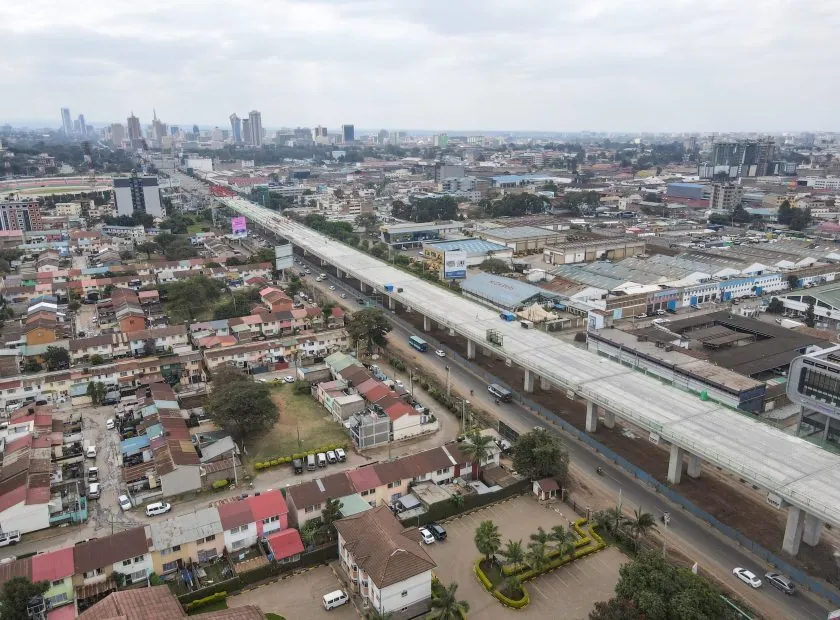
I’m being driven to another assignment, on Mombasa road, along the Mlolongo-Rironi express way. A friend from another country described it as the perfect analogy for what Nairobi is today; a place built for the rich that only tolerated everyone else.
In a way, he was right. Nairobi can be the best city to live in, and the worst place, depending on where in the city you lay your head. However, I see the expressway as an expression of another very Kenyan oxymoron. The expressway is a marvel and a monstrosity all at once.

Photo Credit (KeNHA)
Many Kenyans, now used to year after year of news of corruption scandals that emerged as the country’s infrastructure was rebuilt, have more than a suspicion that the expressway was a product of the same.
Many will hate that it cost so much right from conception, that a few well-placed individuals may have stolen millions as it snaked its way through the city and dealt a near-fatal blow to the “green city in the sun” legend.
And yet, once complete, the road will be used by many of these same people. Begrudgingly at first, then as a matter of convenience to escape our hellish traffic, then as a standard commute.
The more enthusiastic among us will be counting down the days until April, double-tapping every Instagram post capturing how it has updated Nairobi’s ever modernizing cityscape. The expressway, to me, is a riddle that if answered can explain a lot about Kenya: What can you put your trust in anymore?
What’s trust got to do with it?
“Have you ever paid a bribe to get something done?” Chuckles could be head in the audience when Al Jazeera’s Medhi Hassan posed this question to opposition leader, Raila Odinga in a widely watched town-hall style interview.
Odinga’s response may have been surprising to foreigners, but I suspect some of the laughter in the audience came from Kenyans who knew his answer before he spoke. “The question is when, not if. As you have rightly put it, every Kenyan does it” he responded.
That interview was broadcast in 2016, a year before the 2017 general election that set a precedent for this country in many ways. The results of the first were annulled, the opposition boycotted the second and a mock swearing in of Raila Odinga in January of the following year.
The 2017 electoral period was a study in just how deep the mistrust of Kenya’s elections body, the IEBC had gone into the public psyche.
It was no longer the contention of the opposition that elections were badly run and probably interfered with, the highest court in the land entered this mistrust into the annuls of historical fact on September the 1st, 2017. How does this connect to the wider mistrust that I am speaking of?
Every year, the OECD publishes a report on trust in government. 2020’s report showed that across its member states, trust was a very big casualty of the current COVID-19 pandemic, with 51% of OECD member states citizens saying that they trust their governments.
Granted that these are extraordinary times, but the pandemic did more to reveal the true nature of the relationship between governments in these countries and their citizens. It did so for countries across the world.
The United Kingdom, for instance, ranked amongst the least trustworthy governments of the OECD. The report cites five main drivers of trust in government; responsiveness, reliability, integrity, openness and fairness.
Through these and other metrics one gets a sense of the endorsement that has been made in one’s government. So, what of Kenya? Let’s begin with reliability.
President Uhuru Kenyatta’s final two State of the Nation addresses have largely been focused on explaining the dividend that infrastructure projects delivered under his tenure.
More recently his acolytes have underlined that most of these projects were delivered in his second term, a dog-whistle call-out to deputy President William Ruto with whom Kenyatta fell out shortly after their re-election.
Various roads in the city have billboards touting these achievements. To be sure, Kenya has needed an infrastructure upgrade for decades, and the roads, hospitals and fire-stations built in this time will be a welcome relief for some if they don’t pay attention to the natural question to ask of this administration’s strategy in delivering shiny new buildings and roads; what’s the price tag?
Of course, Kenya’s debt is an ongoing concern not just on these newly paved streets but in treasury as well. Finance Cabinet Secretary Ukur Yattani has on more than one occasion signaled that Kenya’s debt is reaching unsustainable levels.
Deeper than the question of how much we owe is how it has been spent. Again, there aren’t many reassurances that money borrowed is being spent well.
Moses Kuria, a member of parliament from president Kenyatta’s own backyard admitted that Kenya’s parliament had failed to oversight reckless borrowing, and helped the government “cook the books “on its debt position.
He called this “a betrayal of trust”. Unwise as it is to trust politicians, I’d take him at his word on this. All the projects delivered under this administration’s tenure won’t matter if Kenyans debts stretch our further than their shillings.
Not only is it a burden to the current generation of Kenyans but a burden passed down to future generations. How reliable is a regime that does this to its citizens?
The same arguments can be made to speak about integrity. Here though, there are far too many examples of double- speak, actions taken out of convenience and demonstrations of a lack of integrity to cite in one article. The blatant disregard for court orders by senior Government officials is one example.
A Deputy President serving in a government that he doesn’t seem to believe in is another. Kenya’s half-hearted fight against corruption is another. The list goes on. Integrity is an incredibly important metric in my view.
It underpins most if not all of the others, because it is via integrity that one is able to judge the motives of a person, or for that matter, an institution’s actions.
No side of Kenya’s leadership can say with confidence that it doesn’t suffer a dearth of integrity amongst its ranks. As a metric driving trust, responsiveness if defined through a government’s ability to provide or regulate services.
In some areas of service delivery, responsiveness by government has made huge leaps since 2002, aided in no small part by the internet and devolution.
Accessing information about your unclaimed assets is easier than ever before, as is being able to pay for utilities or get an ID.
I’d qualify this by saying that access to government services is still dependent on the aggregate state of development of the region in which you live, as well as other inherent biases.
Somalis, Nubians and other underserved communities still struggle to get access to identification documents, land ownership records and other information that underlines their citizenship. Further still, the question of corruption stalks responsiveness in Kenya. Take this tweet by Verah Okeyo.
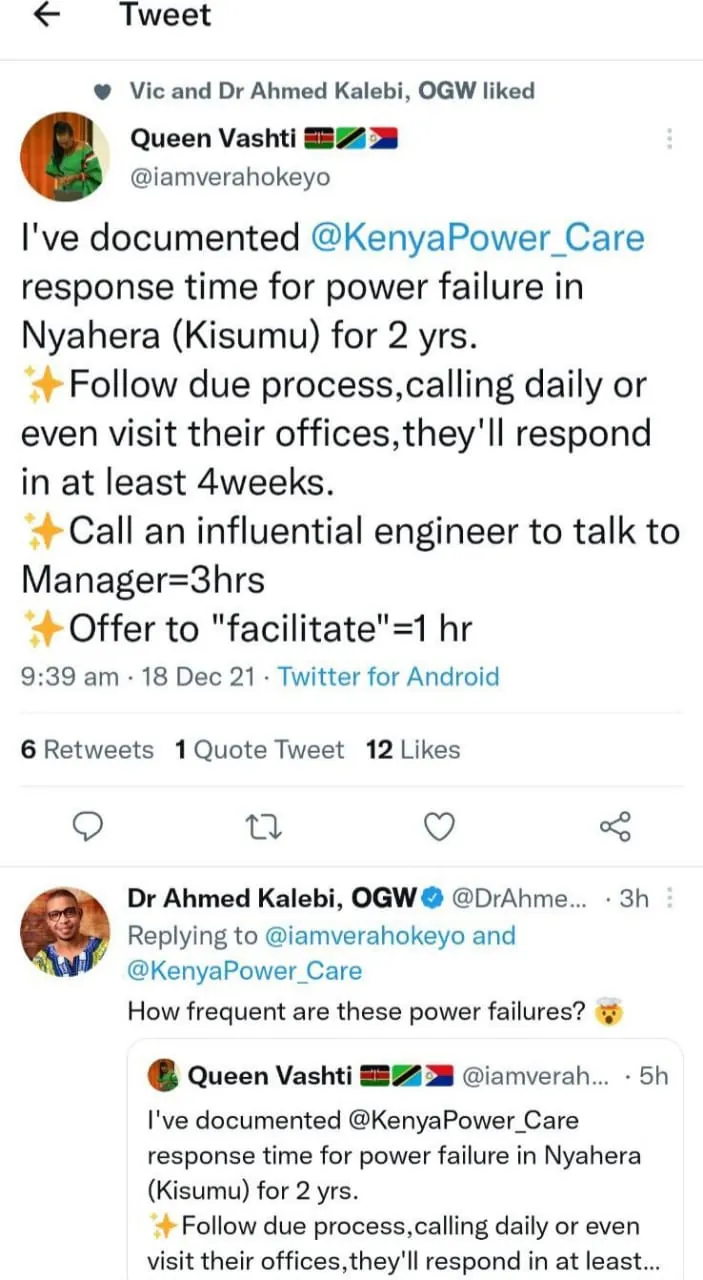
The breakdown of her process in accessing electricity that she pays for isn’t surprising, but it does reveal the distance between a citizen and the services that they pay for (either directly or through their taxes).
Therein lies the challenge. If responsiveness is tied to relationships or money, then there will always be a deficit in trust between the average citizen with only one or neither of these and their government.
Openness and fairness relate to how often government listens, consults and explains itself to its people, and whether living conditions for all are being improved. The Jubilee regime has struggled with openness, but it hasn’t been all bad.
One example I can cite from experience is in explaining the 2016 Mining act to artisanal miners in various parts of Kenya. The mining industry in Kenya is largely informal, with thousands of people depending on various forms of mining for their livelihood.
The act seeks to mainstream artisanal mining, giving miners better ownership of the stuff they haul out of the ground, and secure provenance of the items mined.
In 2021, I traveled to various mining towns in the country to interview players in the mining sector, and found that whereas not everyone knows every clause of the act, many have felt its impact in the organizing that is taking place on the ground.
Miners are now joining Sacco’s that could access mining licenses, freeing them from the illegal status they worked under for decades. But, I fear, that it is more of the same mediocrity and opaqueness that Kenyans have become used to in many other important areas of life.
A response to a series of damaging and deadly school fires has been to moot the reintroduction of corporal punishment.
We are in the final year of the Jubilee government’s reign and barely know the details of the standard gauge railway financing contracts between Kenya and China.
The COVID-19 pandemic saw tens of Kenyans murdered by police officers enforcing lockdown restrictions, and now Kenyans are grappling with a badly explained vaccine mandate.
On living conditions, a recent report by economic and social rights centre Hakii Jamii revealed the dire situation that millions of Kenyans are faced with when they or their loved ones fall ill.
The problems of public healthcare have driven Kenyans into the hands of often ill-equipped or expensive private healthcare operators.
Fairness will never be judged by the intentions of the person or institution proclaiming to be fair, but by the actions of that person or institution and their impact.
Kenya is heading towards a pivotal election. The names that will be on their ballots will be clear soon, but what isn’t clear is whose agenda it is to restore public trust in government.
It seems silly for me to have to write this, but it does bear asking this question. In whose hands are we safe? I ask in all seriousness, because the alternative to not asking is worse. If we cannot fix the things that underpin trust in Kenya, then we shall endure more of the same problems we have for decades.
The Jubilee government’s reign is an example of how these problems can be intensified over time. I will likely drive on the expressway once it is complete. It will shave time off of my journey.
However smooth the ride though, it won’t answer the question I have of our government, and the governments to come. What can we really place our trust in?